Why a 60-Day Rehab Program Could Be Your Best Path to Lasting Recovery
60 day rehab programs offer a crucial middle ground for addiction treatment, providing more comprehensive care than shorter programs while remaining accessible for those who can’t commit to three months away from home or work.
Quick Answer: What is 60-Day Rehab?
A 60-day rehab is a two-month addiction treatment program that includes medical detox, intensive individual and group therapy, evidence-based treatments (CBT, DBT), Medication-Assisted Treatment (MAT), dual diagnosis support, and relapse prevention planning.
Research from the National Institute on Drug Abuse (NIDA) shows that longer treatment durations yield better outcomes. While 90-day programs have the highest success rates, 60-day programs significantly outperform 30-day options by allowing more time to address underlying issues and build coping skills.
This program length is ideal for those with moderate to severe addiction, co-occurring mental health disorders (depression, anxiety, PTSD), or a history of relapse. It’s a strong option for anyone needing more than basic stabilization but unable to commit to 90+ days.
Average Cost: $12,000 to $60,000. Many insurance plans, including private and Medicaid, cover a significant portion, and financing is often available.
The extended duration allows the brain to heal while you develop lasting skills. At Addiction Helpline America, our specialists provide confidential, 24/7 support to help you find a 60 day rehab program that fits your unique needs and insurance.
60 day rehab vocabulary:
What is a 60-Day Rehab Program and What Happens?
Think of a 60 day rehab program as a reset button for your life, with professional support every step of the way. This two-month journey provides real time to heal, both physically and emotionally. Typically a residential or inpatient program, you’ll stay at a treatment center in a safe, substance-free environment, away from daily triggers and stress.
The process begins with a thorough intake assessment to create a personalized treatment plan based on your substance use history, physical and mental health, and life circumstances. For many, the first step is medical detoxification, where healthcare professionals manage withdrawal symptoms safely and comfortably under constant supervision.
From day one, the team also focuses on aftercare planning, ensuring you have a solid support system and clear next steps for when you leave. For a deeper dive into different treatment approaches, check out our Drug Rehab Programs Complete Guide.

The Typical Stages of Treatment
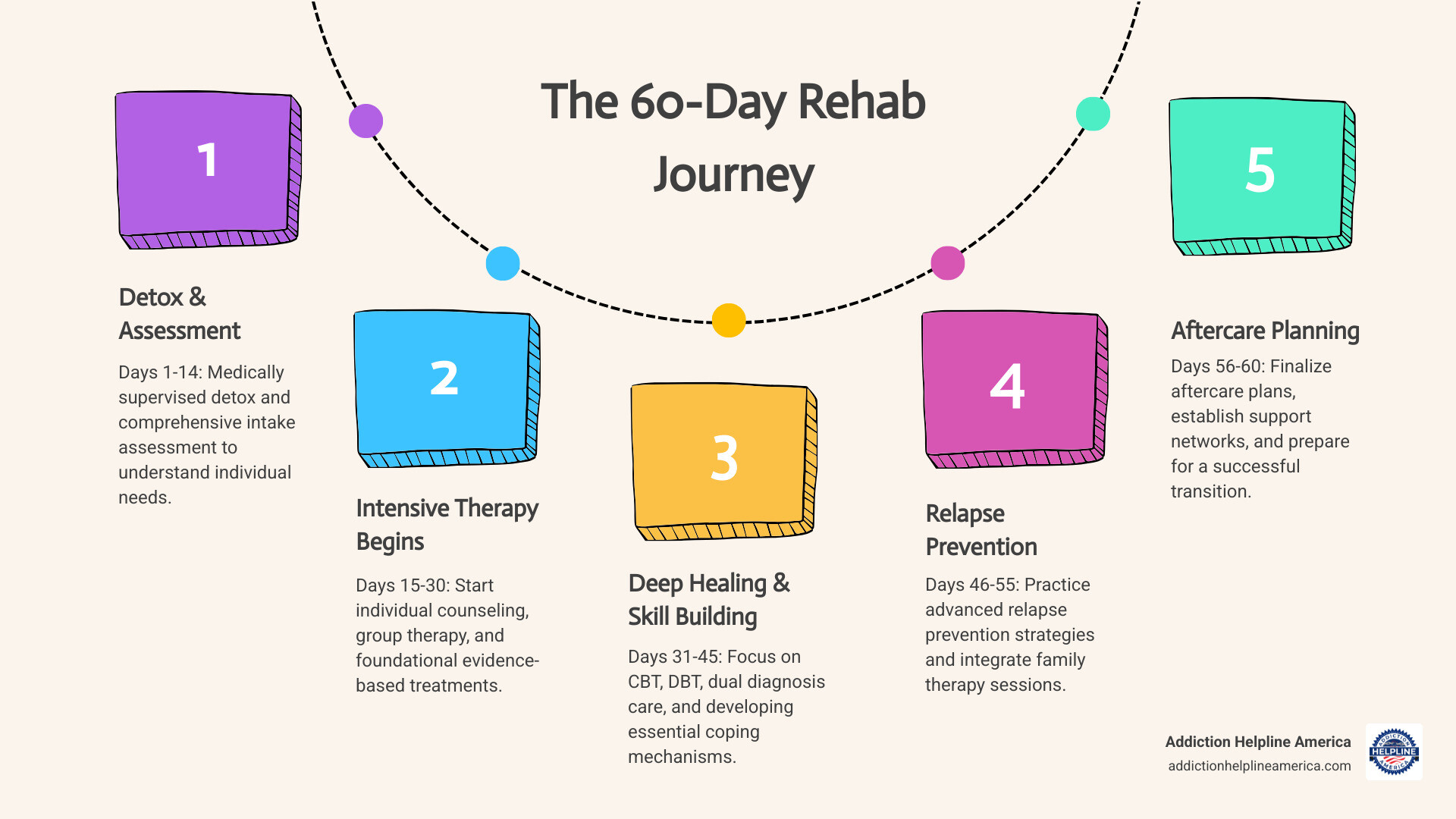
A 60 day rehab journey unfolds in distinct phases:
- Weeks 1-2: Stabilization. This phase includes a comprehensive assessment and, if needed, medically supervised detox. The focus is on managing withdrawal symptoms and helping you acclimate to the treatment environment.
- Weeks 3-6: Intensive Therapy. Once stable, you’ll engage in a structured schedule of individual, group, and family therapy. This is where you’ll explore the roots of your addiction, develop coping strategies, and practice new behaviors in a supportive setting.
- Weeks 7-8: Integration and Aftercare Planning. The final weeks are dedicated to preparing for your return to daily life. This involves advanced relapse prevention strategies, practicing real-world scenarios, and finalizing your aftercare plan, which may include outpatient programs, sober living, or support groups.
Therapies and Treatments Offered in a 60-day rehab
A 60 day rehab allows for deep engagement with multiple evidence-based therapies:
- Cognitive Behavioral Therapy (CBT): Helps you identify and change negative thought patterns and behaviors related to substance use.
- Dialectical Behavior Therapy (DBT): Teaches skills in mindfulness, distress tolerance, emotional regulation, and interpersonal effectiveness, which is especially helpful for co-occurring conditions.
- Medication-Assisted Treatment (MAT): Combines FDA-approved medications with counseling to treat opioid or alcohol addiction, normalizing brain chemistry while you work on psychological recovery.
- Dual Diagnosis Care: Provides integrated treatment for both addiction and co-occurring mental health conditions like anxiety, depression, or PTSD.
- Trauma-Informed Care: Uses specialized approaches to help you heal from past trauma that may fuel addiction, creating a safe and supportive environment.
- Individual, Group, and Family Therapy: A 60-day program allows for more sessions (30-40 individual, 6-10 family) than shorter programs, enabling deeper exploration and relationship repair.
- Relapse Prevention and Holistic Treatments: Skills are taught throughout your stay, and many programs incorporate yoga, meditation, art therapy, and nutrition education to support overall well-being and help you find healthy ways to cope with stress.
The Benefits of a 60-Day Program vs. Other Durations
When seeking help for addiction, a key question is how long to stay in treatment. A 60 day rehab program occupies a sweet spot, offering more time to heal and practice new skills than shorter programs, which is crucial for lasting change.
Research from the National Institute on Drug Abuse consistently shows that longer treatment leads to better outcomes. While 90-day programs often have the highest success rates, a 60 day rehab provides many of the same benefits while being more accessible for those with work, family, or financial constraints.
| Feature | 30-Day Program | 60-Day Program | 90-Day Program |
|---|---|---|---|
| Depth of Treatment | Initial stabilization, foundational work | Deeper exploration, skill solidification | Comprehensive, intensive, addresses complex issues |
| Time for Skill-Building | Limited, focus on immediate coping | Moderate, allows consistent practice | Extensive, fosters lifelong skills |
| Ideal Candidate | Mild SUD, first-time treatment, strong support | Moderate-severe SUD, co-occurring, previous relapse | Chronic/severe SUD, dual diagnosis, multiple relapses |
| Relapse Prevention Focus | Basic introduction | Strong emphasis, practical application | In-depth, robust strategies, long-term planning |
| Cost | Lower | Moderate | Higher |
| Commitment Level | Less demanding | Balanced commitment | Significant commitment |
Advantages Over 30-Day Programs
A 30-day program is a great start, but it goes by quickly. A 60 day rehab provides a crucial extra month to move beyond initial stabilization and into deeper therapeutic work. This additional time allows you to explore the underlying causes of addiction, such as trauma or co-occurring mental health issues. You get significantly more time to practice new coping skills until they become second nature, giving your brain more time to heal and rebalance. This extended duration better prepares you to identify and manage real-world triggers upon returning home.
How It Compares to 90-Day Programs
While 90-day programs offer the best odds for long-term recovery, a 60 day rehab is an excellent and often more practical choice. If a three-month commitment feels overwhelming and prevents you from seeking help, a two-month program is a powerful alternative. It means less time away from family and work, making it a more accessible commitment for many. A 60 day rehab still provides a strong foundation for recovery, including detox, intensive therapy, and aftercare planning. Many use it as a launchpad, transitioning to an intensive outpatient program (IOP) or sober living to extend their support system. For more on longer options, see our Ultimate 90 Day Inpatient Rehab Guide.
Who is a 60-Day Rehab Program Best Suited For?
A 60 day rehab is an effective choice for many individuals, offering a balance of intensive care and practical duration. It is particularly well-suited for those who need more than a brief intervention but find a 90-day stay impractical.

This program length works well for individuals with:
- Moderate to severe addiction: When substance use significantly impacts daily life, relationships, or health.
- Co-occurring mental health disorders: The extended time allows for integrated dual diagnosis care for conditions like anxiety, depression, or PTSD.
- A history of relapse: A longer stay provides more time to build stronger coping mechanisms and relapse prevention skills.
- An unstable home environment: Two months in a safe, structured setting offers a crucial buffer from triggers and negative influences.
For more on extended treatment, explore our guide to Long Term Alcohol Rehab.
Treating Specific Addictions
The comprehensive nature of a 60 day rehab is effective for various substance dependencies. For Alcohol Use Disorder, it allows for safe detox and therapy to rewire thought patterns. With Opioid Use Disorder, it provides critical time for Medication-Assisted Treatment (MAT) and intensive therapy to address powerful physical and psychological dependence. For stimulant addiction (cocaine, meth), the two-month duration is vital for the behavioral work needed to rebuild the brain’s reward system. It is also effective for polysubstance use, allowing clinicians to address the complexities of multiple dependencies.
The Importance of Dual Diagnosis Care
Addiction and mental health are often deeply intertwined. A quality 60 day rehab provides the necessary time for proper dual diagnosis care. If you use substances to cope with anxiety, depression, or trauma, simply removing the substance isn’t enough. An integrated approach treats both the substance use disorder and the mental health condition simultaneously. This is crucial because the conditions feed each other; untreated anxiety can trigger relapse, and active addiction worsens depression. In a 60-day program, clinicians can properly diagnose co-occurring conditions, adjust medications, and teach healthy coping strategies that address both issues, improving your overall quality of life.
Navigating Cost, Insurance, and Choosing Your 60 day rehab
Figuring out the cost of treatment and insurance can feel overwhelming, but you don’t have to do it alone. At Addiction Helpline America, we provide free, confidential guidance to help you find a 60 day rehab that fits your recovery needs and financial situation.
When evaluating programs, it’s crucial to ask key questions. Ensure the facility is accredited (by JCAHO or CARF), employs credentialed staff, uses evidence-based practices, and offers personalized treatment plans with robust aftercare support. Inquire about the staff-to-patient ratio, costs, and payment options.
How Much Does a 60-Day Rehab Program Cost?
A 60 day rehab program typically costs between $12,000 and $60,000. This wide range is influenced by several factors:
- Location: Facilities in prime locations often cost more.
- Amenities: Luxury rehabs with private rooms, gourmet meals, and spa services are at the higher end.
- Level of Care: Inpatient programs with 24/7 supervision are more expensive than outpatient options.
- Specific Therapies: Specialized services like equine therapy or advanced trauma care can increase the cost.
While the cost may seem high, it’s an investment in your future that often pales in comparison to the financial and personal costs of untreated addiction, according to data from the National Center for Drug Abuse Statistics.
Will Insurance Cover a 60-day rehab?
Yes, many insurance plans cover a substantial portion of a 60 day rehab. The Affordable Care Act (ACA) and the Mental Health Parity and Addiction Equity Act (MHPAEA) mandate that insurers cover substance use disorder services.
Coverage depends on “medical necessity,” meaning a healthcare professional must document that this level of care is appropriate for you. This is common for those with moderate-to-severe addiction or co-occurring conditions. The first step is insurance verification. Your chosen facility’s admissions team can handle this for you, clarifying your deductibles, co-pays, and whether the facility is in-network (lower cost) or out-of-network.
Private insurance, Medicaid, and Medicare all offer coverage options. If you’re uninsured or underinsured, state-funded programs, sliding-scale fees, or payment plans may be available. We can help you steer these options to find an affordable, quality program.
Life After Rehab: Aftercare and Potential Challenges
Completing a 60 day rehab is a huge achievement, but recovery is a lifelong journey. The period after treatment is vulnerable, making robust aftercare planning essential for sustained sobriety.
Essential Aftercare and Continuing Care Options
Effective aftercare provides ongoing support to prevent relapse. Quality programs begin this planning from day one. Key options include:
- Intensive Outpatient (IOP) and Partial Hospitalization (PHP): Structured therapy several days a week while you live at home.
- Ongoing Individual Therapy: Continues one-on-one support to reinforce skills and address new challenges.
- Sober Living Homes: A supportive, substance-free environment that bridges the gap between rehab and independent living.
- Support Groups: Groups like Alcoholics Anonymous (AA), Narcotics Anonymous (NA), or SMART Recovery offer invaluable peer encouragement and accountability.
- Alumni Programs: Provide a network of support, events, and resources from your treatment facility.
Understanding the Limitations and Challenges
While a 60 day rehab provides a strong foundation, addiction is a chronic disease requiring ongoing vigilance. Common challenges include:
- Transitioning to Daily Life: Adjusting to routines and responsibilities outside the structured rehab environment can be difficult as triggers re-emerge.
- Managing Triggers: Cravings, stress, and social pressures are ongoing challenges that require active management using learned coping skills.
- Ongoing Commitment: Sustained recovery requires continuous effort, including active participation in aftercare and making sobriety a daily priority.
Recognizing these challenges is a key step toward building resilience. Our team at Addiction Helpline America emphasizes that recovery is a journey of continuous growth.
Frequently Asked Questions about 60-Day Rehab
Choosing to enter a 60 day rehab is a major decision, and it’s normal to have questions. Here are straightforward answers to some common concerns.
How effective is a 60-day rehab program?
A 60 day rehab is highly effective, offering significant advantages over shorter programs. While research from the National Institute on Drug Abuse shows that 90+ days of treatment yield the best long-term outcomes, a 60-day program provides a powerful middle ground. The extra time allows for deeper healing, more therapy sessions, and more practice with coping skills in a safe environment. When combined with a commitment to aftercare, a 60-day program provides a strong foundation for lasting recovery.
Will my insurance cover the full 60 days?
Many insurance plans will cover a significant portion, and sometimes all, of a 60 day rehab. Coverage depends on medical necessity, which is determined by clinicians based on the severity of your addiction, co-occurring conditions, and treatment history. Most plans require pre-authorization, a standard process handled by the rehab facility. Your out-of-pocket costs will depend on your plan’s deductible and whether the facility is in-network. The best first step is to verify your benefits, a service our team at Addiction Helpline America can help you with, connecting you to facilities that accept your insurance.
Can I keep my job while in a 60-day program?
Yes, there are protections that can help you keep your job. The Family and Medical Leave Act (FMLA) allows eligible employees to take up to 12 weeks of unpaid, job-protected leave for addiction treatment. Your employer must hold your position and maintain your health coverage. Many companies also offer Employee Assistance Programs (EAP) for confidential support. While a residential 60 day rehab requires you to live on-site and not work, this immersive approach often provides the best chance for recovery. Your health comes first, and taking two months now can save your career in the long run.
Find the Right Path to Recovery Today
Deciding to enter a 60 day rehab program is a courageous choice and a declaration that your future is worth fighting for. This two-month journey offers a powerful balance: it’s long enough for meaningful change yet accessible enough to feel achievable.
A 60 day rehab provides the time to heal physically and emotionally, dig into the root causes of addiction, and build confidence in your ability to maintain sobriety. It’s the sweet spot for building a strong foundation for a new life.
At Addiction Helpline America, we understand this is an overwhelming moment. Our compassionate addiction specialists are available 24/7 to provide free, confidential support. We’re not here to judge—we’re here to listen and help you find a 60 day rehab program that truly fits your needs, insurance, and personal situation.
We work with a vast network of accredited treatment centers and can handle the details, from verifying your insurance to coordinating admission, so you can focus on your recovery. The hardest step is the first one, but you don’t have to take it alone. Reach out to us today, and let’s find the right path forward together.
Find a rehab program in your area