
Finding Hope and Healing Through Addiction Treatment in Alabama
Addiction Treatment in Alabama offers multiple pathways to recovery through 155 treatment centers across the state. Here’s what you need to know:
Quick Overview of Alabama Treatment Options:
- Inpatient/Residential Programs – 24/7 medical supervision and structured care for severe substance use disorders
- Outpatient Programs (PHP & IOP) – Flexible treatment allowing you to maintain work and family responsibilities
- Medication-Assisted Treatment (MAT) – FDA-approved medications combined with counseling, available at 21 certified Opioid Treatment Programs
- Dual Diagnosis Programs – Integrated care for co-occurring mental health and substance use disorders (offered at 82% of facilities)
- Specialized Programs – Custom services for veterans, women, pregnant individuals, and other specific populations
Payment Options:
- 69% of centers accept Medicaid
- 63.2% accept private insurance
- 56.1% offer free or low-cost programs
- 55.5% provide sliding-scale fees based on income
Most treatment centers are located in Jefferson, Mobile, and Madison counties, but services are available in 59 of Alabama’s 67 counties.
Whether you’re struggling with alcohol, opioids, or other substances, finding the right treatment can feel overwhelming. The good news is that Alabama offers diverse, accessible options for every situation and budget. Many facilities provide confidential screening and assessment to determine the best level of care for your specific needs.
At Addiction Helpline America, we’ve helped thousands of individuals and families steer the addiction treatment landscape across Alabama, connecting them with appropriate resources and compassionate care. Our free, confidential service exists to guide you through every step of your recovery journey, from initial screening to long-term support.
Understanding the Landscape of Addiction Treatment in Alabama
Alabama is home to a robust network of addiction treatment resources, with 155 treatment centers spread across the state. While many of these facilities are clustered in the more populous counties like Jefferson, Mobile, and Madison, options are available in 59 of Alabama’s 67 counties. This means that no matter where you are in Alabama, there’s likely support within reach.
The Alabama Department of Mental Health (ADMH) plays a crucial role in overseeing and coordinating addiction services throughout the state. The ADMH is responsible for the regulation of Alabama’s public substance use services delivery system. Rather than operating programs directly, the ADMH contracts with community-based entities to offer both outpatient and residential services. This ensures a broad reach and localized support.
A significant aspect of the ADMH’s approach is its commitment to accessibility. All state-funded providers in Alabama offer services on a sliding fee scale, which means the cost of treatment is adjusted based on an individual’s income. This makes treatment low-cost or even free for those with limited financial resources. We understand that taking the first step can be daunting, but knowing that financial barriers can be overcome is a huge relief for many.
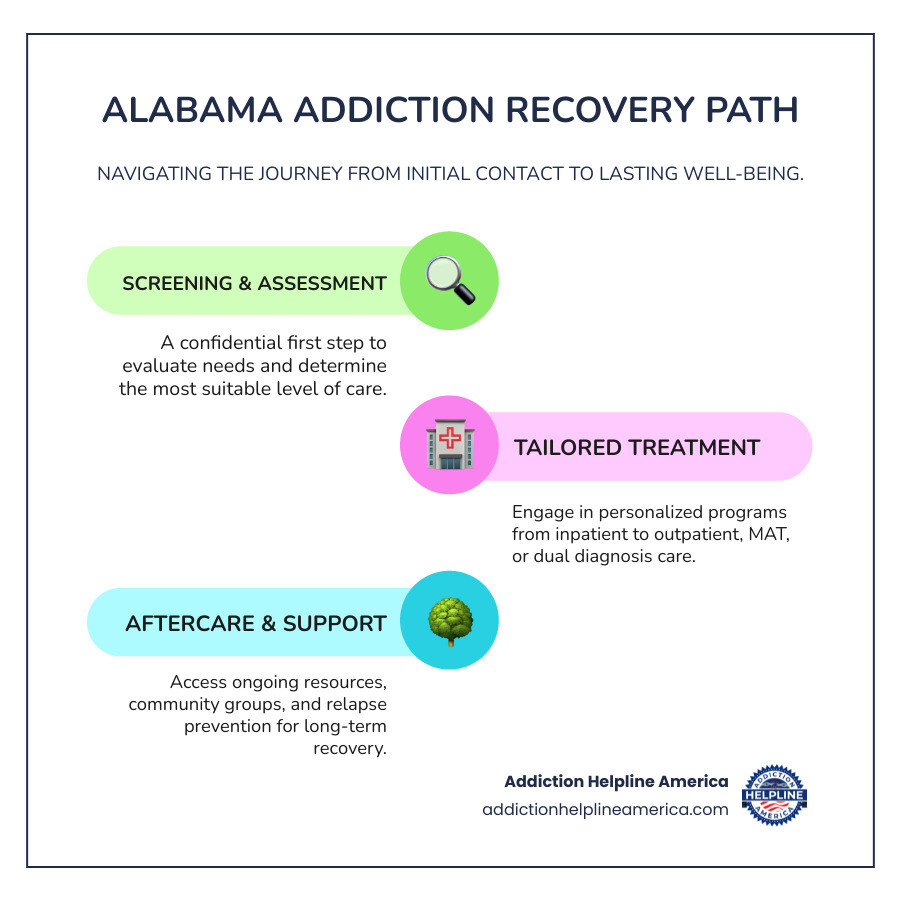
The initial process for accessing Addiction Treatment in Alabama typically begins with a screening. When you first contact a provider, a confidential screening is conducted to determine your eligibility for services. If the screening indicates a high risk (usually with two or more positive responses), you’ll then undergo a comprehensive assessment. This assessment is a vital step, as it helps professionals understand your specific substance use patterns, medical history, and mental health needs, ultimately guiding them to determine the most appropriate services and level of care for you.
For more detailed information and resources on treatment in Alabama, you can explore the official website of The role of the Alabama Department of Mental Health (ADMH) or visit Find Addiction Treatment Resources from VitAL Alabama. These resources can help you steer the system and find the support you need.
Option 1: Inpatient and Residential Programs
For individuals facing severe substance use disorders, inpatient and residential treatment programs offer a highly structured and supportive environment. These programs provide 24/7 medical supervision, which is particularly crucial during the detoxification phase. Medical detox is the process of safely managing withdrawal symptoms, and it can be life-saving for those withdrawing from substances like alcohol or benzodiazepines, where withdrawals can be fatal.

In an inpatient setting, you live at the facility, allowing you to fully focus on your recovery without the distractions or triggers of your daily life. The structured schedule typically includes individual therapy, group counseling, educational sessions, and recreational activities. This immersive environment fosters strong peer support, as you connect with others on similar journeys.
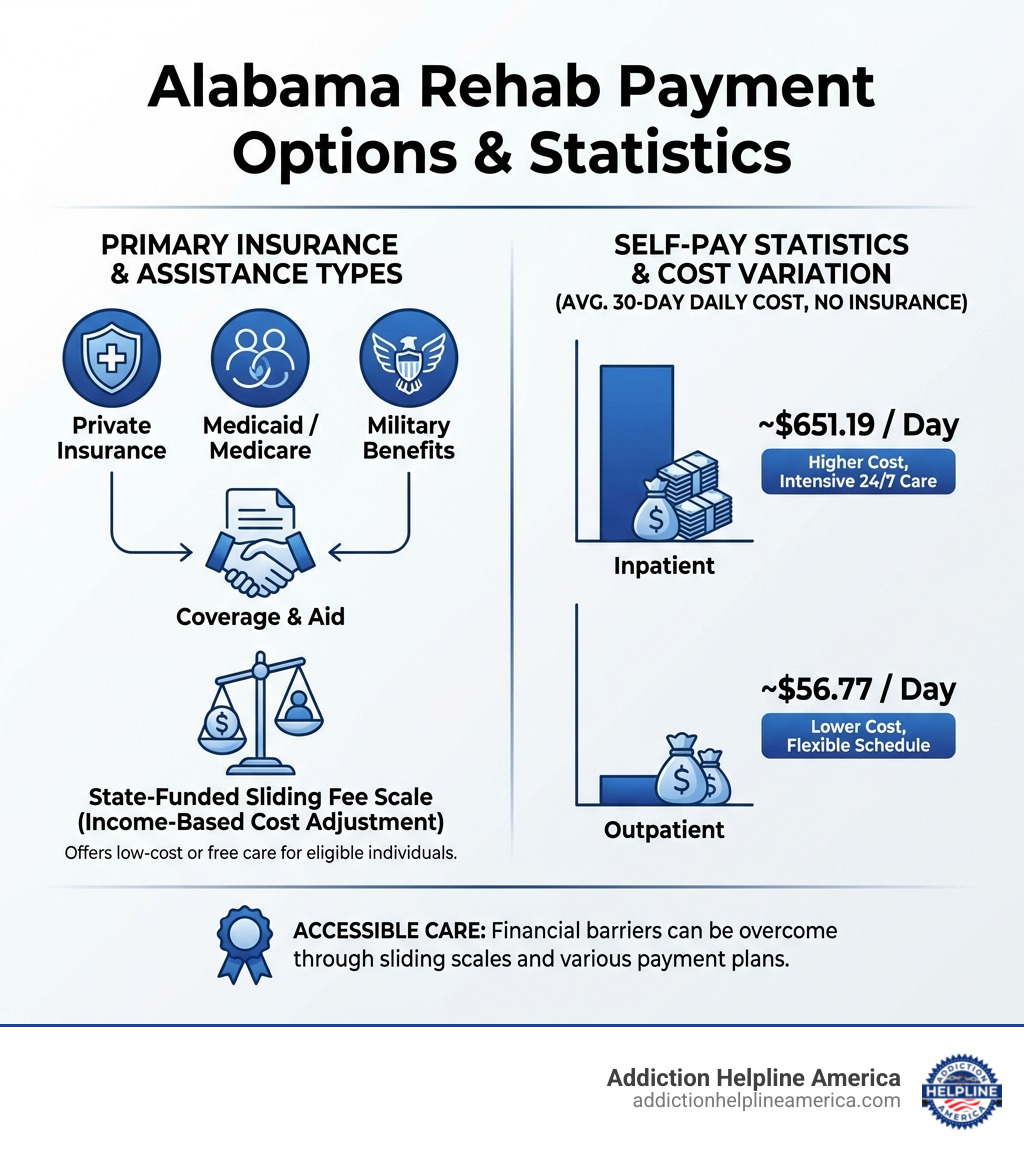
While the average cost for a 30-day inpatient stay in Alabama can be around $651.19 per day without insurance, many facilities offer various payment options and accept insurance. We can help you explore these options to make treatment affordable.
To learn more about this intensive level of care, you can find More info about Inpatient Rehab Centers in AL.
Here’s a quick comparison of inpatient versus outpatient treatment to help you understand which might be more suitable for your needs:
| Feature | Inpatient/Residential Treatment | Outpatient Treatment |
|---|---|---|
| Environment | Live at the facility, 24/7 supervision, highly structured | Live at home, attend sessions at a facility |
| Intensity | High-intensity, immersive | Low to medium intensity (varying with PHP/IOP) |
| Medical Care | On-site medical staff, medical detox available | Medical support as needed, not 24/7 |
| Flexibility | Limited, full-time commitment | High, allows for work, school, and family responsibilities |
| Ideal For | Severe SUD, co-occurring disorders, unstable home environment | Mild to moderate SUD, strong support system, step-down care |
| Cost (avg) | Higher (e.g., $651.19/day for 30-day stay without insurance) | Lower (e.g., $56.77/day for 30-day program without insurance) |
| Peer Support | Integral part of daily life | Scheduled group sessions |
Option 2: Outpatient Programs (PHP & IOP)
Outpatient programs offer a flexible alternative to inpatient care, allowing individuals to receive treatment while continuing to live at home, attend work or school, and maintain family responsibilities. This makes them an excellent choice for those with mild to moderate substance use disorders, or as a step-down option after completing an inpatient program.
There are different levels of outpatient care:
- Partial Hospitalization Programs (PHP): Often referred to as day treatment, PHP is the most intensive form of outpatient care. It involves attending treatment sessions for several hours a day, multiple days a week, providing a high level of structure and support without requiring overnight stays.
- Intensive Outpatient Programs (IOP): IOPs offer a step down from PHP, with fewer hours per week but still providing comprehensive therapy. These programs typically involve a few hours of treatment sessions, three to five days a week.
- Standard Outpatient Programs: These are the least intensive, usually involving one or two therapy sessions per week.
Outpatient programs commonly include individual counseling, group therapy, family sessions, and life skills training. They help individuals develop coping mechanisms, manage triggers, and build a supportive sober network. The average cost for a 30-day outpatient program in Alabama is significantly lower, around $56.77 per day without insurance, making it a more accessible option for many.
For those in areas like Irondale, which is near Birmingham, you can find an outpatient program in Irondale, AL that can support your recovery journey while you manage your daily life.
Option 3: Medication-Assisted Treatment (MAT)
Medication-Assisted Treatment (MAT) is a highly effective, evidence-based approach that combines FDA-approved medications with counseling and behavioral therapies. It’s particularly vital for combating opioid and alcohol addiction, as it addresses the physical aspects of dependency, reducing cravings and preventing relapse. MAT is not simply switching one addiction for another; it’s a carefully monitored medical treatment designed to stabilize individuals and help them focus on their recovery journey.
Key medications used in MAT include:
- Buprenorphine (e.g., Suboxone, Subutex): Used for opioid use disorder, it helps reduce cravings and withdrawal symptoms without producing the same euphoric effects as other opioids.
- Methadone: Also used for opioid use disorder, methadone helps to stabilize brain chemistry, block the euphoric effects of opioids, and relieve cravings.
- Naltrexone (oral or injectable Vivitrol): Available for both opioid and alcohol use disorders, Naltrexone blocks the euphoric and sedative effects of opioids and reduces alcohol cravings.
In Alabama, MAT services are available in 16 counties, with 21 certified Opioid Treatment Programs (OTPs) specifically designed to provide comprehensive care for opioid addiction. These programs ensure that individuals receive both the necessary medication and the crucial therapeutic support for long-term recovery.
The effectiveness of MAT is widely recognized by experts. As SAMHSA (Substance Abuse and Mental Health Services Administration) states, MAT programs are safe, reduce overdoses, increase treatment retention, and improve social functioning. You can find more information on its efficacy from SAMHSA information on MAT effectiveness.
If you’re seeking MAT, our team can help you locate certified providers. For instance, if you’re in the central Alabama area, you might look for a treatment center in Cullman that offers these services.
Option 4: Specialized Dual Diagnosis Programs
It’s common for individuals struggling with substance use disorders to also experience co-occurring mental health conditions. This is known as a dual diagnosis, and it requires an integrated treatment approach where both the addiction and the mental health disorder are treated simultaneously. In Alabama, we’re fortunate that 82% of rehab programs treat co-occurring mental health disorders, recognizing the interconnectedness of these challenges.
Conditions like anxiety, depression, PTSD, and bipolar disorder can significantly impact an individual’s vulnerability to addiction and complicate their recovery. Dual diagnosis programs offer specialized care that addresses both issues, leading to more sustainable and successful outcomes. These programs typically involve a combination of therapies custom to both conditions, such as cognitive behavioral therapy (CBT), dialectical behavior therapy (DBT), trauma-informed care, and medication management.
Support for individuals and families dealing with mental health issues is also available through organizations like the National Alliance on Mental Illness (NAMI) Alabama. They offer groups and resources that can be invaluable during the recovery process.
If you’re in a major city like Birmingham, you can explore dual diagnosis treatment in Birmingham that can provide the integrated care needed for comprehensive healing. Our team can help you find facilities that specialize in treating both your substance use and mental health concerns.
Option 5: Custom Programs for Specific Populations
Addiction doesn’t discriminate, but recovery paths often benefit from personalized care custom to specific populations. In Alabama, many treatment centers offer custom programs designed to meet the unique needs and challenges faced by different groups.
These specialized programs include:
- Veterans Programs: Military personnel and veterans often carry unique experiences, such as trauma or PTSD, that can contribute to substance use. Programs for veterans understand these challenges and provide targeted therapies and support. For example, the Birmingham VA Health Care System and Tuscaloosa Veterans Affairs Medical Center offer specialized services. You can find Services for Veterans in Sheffield, AL (near Huntsville) and additional help via the Veterans Crisis Line.
- Women-Only Programs: These programs create a safe and supportive environment where women can address issues like trauma, domestic violence, parenting concerns, and relationship dynamics without the presence of men.
- Programs for Pregnant Women and Mothers with Children: Recognizing the critical importance of a mother’s health and the well-being of her child, Alabama prioritizes admission for pregnant women to all certified treatment providers, and there are no admission fees for them. Some programs even allow children to accompany their mothers, removing a significant barrier to treatment.
- LGBTQ+ Affirming Care: These programs provide a welcoming and understanding environment for LGBTQ+ individuals, addressing specific societal pressures, discrimination, and mental health challenges they may face.
- Programs for Professionals: Custom for working individuals, these programs often offer flexible schedules and discreet services to help professionals maintain their careers while seeking recovery.
These custom programs acknowledge that a “one-size-fits-all” approach isn’t always effective. By addressing the specific contexts and challenges of different groups, these programs improve the chances of successful, long-term recovery.
How to Pay for Addiction Treatment in Alabama
Understanding the financial aspects of Addiction Treatment in Alabama is a crucial step for many individuals and families. The good news is that there are numerous payment options available, making treatment more accessible than you might think.
Insurance Coverage: Many rehab centers in Alabama accept various forms of health insurance.
- Private Health Insurance: Accepted at 63.2% of treatment centers in Alabama. If you have a private plan, contact your provider directly to understand your specific coverage for addiction treatment, including what’s covered and for how long.
- Medicaid: Accepted at a high 69% of treatment centers in Alabama. This state and federal program provides health coverage to millions of Americans, including many Alabamians. You can Learn about Alabama’s Medicaid program to see if you qualify and how to enroll.
- Medicare: Accepted at 39.4% of treatment centers in Alabama. This federal health insurance program for people 65 or older, certain younger people with disabilities, and people with End-Stage Renal Disease, can also cover addiction treatment services.
- Federal Military Insurance: Accepted at 38.1% of treatment centers, covering active duty service members, veterans, and their families.
No Insurance Options: Even if you don’t have insurance, there are still viable pathways to treatment in Alabama.
- Cash or Self-Payment: A significant 87.7% of treatment facilities in Alabama accept cash or self-payment. This often involves working directly with the facility to set up payment plans.
- Sliding Scale Fees: 55.5% of treatment centers in Alabama accept sliding-scale fees. This means the cost of your treatment is adjusted based on your income and ability to pay, making it more affordable for individuals with lower incomes.
- Low-Cost or Free Programs: A promising 56.1% of treatment centers in Alabama offer low-cost or free rehab programs. These are often state-funded initiatives or non-profit organizations dedicated to providing care to those who need it most. All state-funded providers in Alabama offer services on a sliding fee scale based on income. Additionally, pregnant women have priority admission to all certified treatment providers in Alabama and there are no admission fees.
We understand that navigating these options can be complex. At Addiction Helpline America, we provide free, confidential guidance to help you verify your insurance benefits and explore all available payment solutions, ensuring that financial concerns don’t stand in the way of your recovery.
Frequently Asked Questions about Addiction Treatment in Alabama
How do I start the process of getting help in Alabama?
Starting the process for Addiction Treatment in Alabama involves a few key steps designed to ensure you receive the most appropriate care. First, you’ll typically make initial contact with a treatment provider. This can be done by calling a helpline or reaching out to a facility directly. During this initial contact, a confidential screening will be conducted to assess your situation and determine eligibility. If the screening suggests a need for further intervention, you’ll then undergo a professional assessment. This in-depth evaluation helps determine the severity of your substance use disorder, any co-occurring mental health issues, and other factors that influence the recommended level of care. Based on this assessment, a personalized treatment plan will be developed for you. The Alabama Department of Mental Health provides a helpful ADMH provider search tool to help you locate facilities. Our team at Addiction Helpline America is also here to offer free, confidential, personalized guidance every step of the way.
What are the key differences between inpatient and outpatient rehab?
The main difference between inpatient (residential) and outpatient rehab lies in the level of supervision and living arrangements during treatment.
- Inpatient Treatment: Requires you to live at the treatment facility 24/7. It offers a highly structured environment with constant medical and therapeutic support. This high-intensity care is ideal for individuals with severe substance use disorders, those needing medical detoxification, or those with unstable home environments.
- Outpatient Treatment: Allows you to live at home while attending scheduled therapy sessions and programs at a facility. It offers more flexibility, making it suitable for individuals with mild to moderate substance use disorders, those with strong support systems at home, or those who need to maintain work, school, or family responsibilities. Outpatient programs vary in intensity, from Partial Hospitalization Programs (PHP) which are almost full-time, to Intensive Outpatient Programs (IOP) with fewer hours, to standard outpatient care.
The suitability of either option depends entirely on your individual needs, the severity of your addiction, and your personal circumstances. We can help you understand which option aligns best with your situation.
Are there free or low-cost addiction treatment options in Alabama?
Yes, absolutely! Alabama is committed to making Addiction Treatment in Alabama accessible to everyone, regardless of their financial situation.
- State-Funded Providers: As mentioned, the Alabama Department of Mental Health contracts with community-based entities that offer services on a sliding fee scale. This means the cost of treatment is adjusted based on your income, making it significantly more affordable, and in some cases, free for those with very low incomes.
- High Availability: A notable 56.1% of treatment centers in Alabama offer low-cost or free rehab programs.
- Special Provisions: For pregnant women, there’s a priority admission policy to all certified treatment providers in Alabama, and crucially, there are no admission fees. This is a vital resource to ensure the health of both mother and child.
- Federally Funded Health Centers: You can also look for federally funded health centers that often provide services on a sliding scale or at no cost to eligible individuals.
Don’t let concerns about cost prevent you from seeking help. There are many options available, and our team is ready to assist you in finding the free or low-cost resources that fit your needs.
Your Path to Recovery Starts Today
Taking the first step toward recovery is a courageous act, and we want you to know that you don’t have to walk this path alone. Addiction Treatment in Alabama offers a diverse range of programs and supportive communities to help you achieve lasting sobriety. Recovery is not just possible; it’s a journey many Alabamians start on every day, leading to healthier, more fulfilling lives.
Aftercare and ongoing support are crucial components of long-term recovery. Community support groups like Alcoholics Anonymous (AA) and Narcotics Anonymous (NA) offer invaluable peer support and a sense of belonging, which can be lifelines during challenging times.
At Addiction Helpline America, we are dedicated to connecting individuals nationwide to addiction and mental health treatment centers. Our mission is to provide free, confidential, personalized guidance to help you find the right recovery program from our vast network. If you or a loved one is ready to take that first step, we are here to help. Your journey to healing and a new beginning can start today.